


Endolift
Minimally Invasive Laser Contouring
Endolift
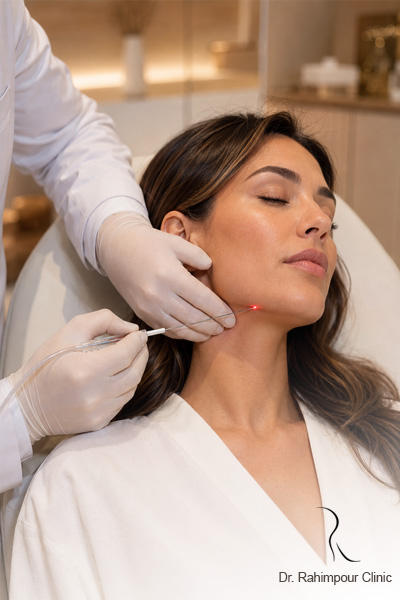
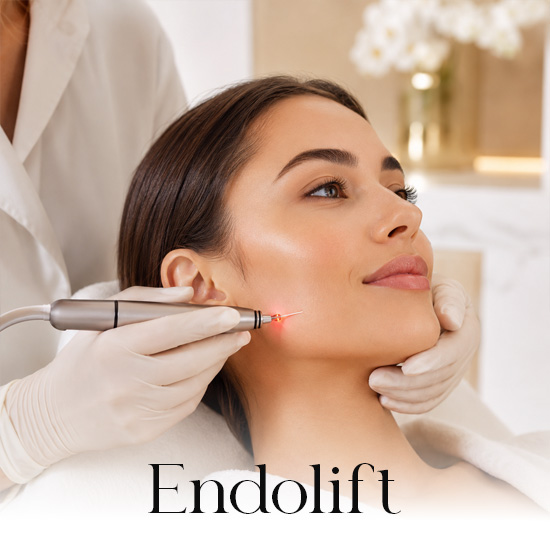
Endolift is a minimally invasive laser treatment in which 1470 nm diode-laser energy is delivered beneath the skin through a very fine micro-optical fiber. Controlled heating of the target tissues may produce an initial contraction of existing collagen fibers and stimulate gradual collagen remodeling. In areas containing limited localized fat, laser energy may also affect adipose tissue and contribute to improved contour. Although the procedure does not require conventional surgical incisions, insertion of a fiber into the subdermal tissues means it should be considered minimally invasive rather than completely non-invasive.
Endolift is commonly considered for mild-to-moderate skin laxity, early jowling, reduced jawline definition, selected submental fullness, limited localized fat deposits, and reduced skin firmness involving the lower face and neck. Depending on patient anatomy and physician experience, it may also be used in selected facial or body areas. The objective is controlled improvement in tissue firmness and contour rather than replacement of a surgical facelift or liposuction in patients with advanced laxity or substantial excess fat.
The treatment effect may include an early component related to thermal tissue contraction and a more gradual effect resulting from collagen remodeling. Initial swelling can temporarily affect the apparent contour, while further improvement may develop over the following weeks and months. The degree and durability of correction vary according to age, skin quality, fat thickness, treatment area, device parameters, physician technique, and the natural aging process.
Endolift requires careful assessment of skin thickness, laxity, fat distribution, and the regional course of nerves and vessels. Appropriate selection of the fiber plane, treatment zones, and energy parameters is essential because excessive energy or incorrect depth may result in burns, contour irregularity, unwanted fat loss, tissue injury, or nerve damage. Current clinical evidence is promising, but larger and more standardized studies are still required to define optimal parameters, long-term efficacy, and safety.
Procedure Essentials
Session Duration
Usually approximately 30–90 minutes, depending on the number and size of treatment areas
Anesthesia
Local or tumescent anesthesia, depending on the area and treatment protocol
Recovery Timeline
Usually several days of swelling, tenderness, or bruising; individual recovery varies
Aesthetic Results
Partly early and partly gradual over several weeks to months
Longevity
Variable; improvement may be long-lasting, although natural aging continues
Repeat Interval
Individualized; several months are generally allowed for full remodeling before considering repeat treatment
Clinical Considerations
Nerve and vascular anatomy, skin and fat thickness, fiber plane, energy delivery, and thermal control
Number of Sessions
Commonly one initial session; additional treatment only after final reassessment
Endolift Aftercare
• Rest and Daily Activities: Most patients can resume light daily activities, although the amount of rest required depends on treatment extent and individual response.
• Swelling: Mild-to-moderate swelling may occur, particularly in the lower face and submental region.
• Bruising: Limited bruising may develop at fiber-entry points or along treated areas and normally resolves gradually.
• Tenderness: Temporary soreness, mild burning, tightness, or tissue sensitivity may occur.
• Altered Sensation: Temporary numbness, tingling, or altered skin sensation may develop and should be monitored during recovery.
• Cold Compresses: Gentle indirect cooling may be used when approved by the treating physician. Do not place ice directly on the skin.
• Head Elevation: Sleeping with the head elevated during the first nights may help reduce facial or neck swelling.
• Fiber-Entry Sites: Keep entry points clean and dry and use dressings or topical products only as directed.
• Cleansing: Clean the area gently according to medical instructions and avoid rubbing or scrubbing.
• Massage: Do not massage the treated area unless specifically instructed by the physician.
• Compression Garment: Short-term compression may be advised following submental or body treatment.
• Medications: Take prescribed analgesics, antibiotics, or other medications exactly as directed.
• Anticoagulants: Do not discontinue or begin aspirin, NSAIDs, anticoagulants, antiplatelet medication, or other prescribed drugs without consulting the prescribing physician.
• Exercise: Avoid strenuous exercise, prolonged bending, and activities that increase swelling during the initial recovery period.
• Excessive Heat: Avoid saunas, hot tubs, very hot showers, and excessive environmental heat until initial inflammation has resolved.
• Sun Exposure: Avoid prolonged direct sun exposure and use broad-spectrum sunscreen.
• Makeup: Resume makeup only after the fiber-entry sites have closed and according to medical advice.
• Active Skincare: Avoid retinoids, AHA/BHA products, scrubs, and irritating skincare until initial recovery is complete.
• Facial Procedures: Postpone facial massage, facials, laser, RF, ultrasound, filler injections, and other facial treatments until cleared by the physician.
• Early Appearance: Do not judge the result during the first days because swelling and inflammation may temporarily alter the contour.
• Final Result: Collagen remodeling and tissue reorganization may continue for several months.
• Follow-up: Follow-up examinations are important for assessing healing, symmetry, nerve function, and development of the final result.
Warning Signs
Contact the treating physician or an appropriate medical service promptly for:
• Severe, unusual, or increasing pain
• Burns, blistering, darkening, skin breakdown, or ulceration
• Blanching or mottled/reticular skin discoloration
• Severe, one-sided, or progressively increasing swelling
• Spreading redness, warmth, discharge, unpleasant odor, or fever
• New facial-muscle weakness, lip or eyebrow drooping, or marked dynamic asymmetry
• Severe or progressive numbness
• Difficulty swallowing, speaking, or breathing
• A hard mass, marked irregularity, depression, or unexpected volume loss
• Visual disturbance, double vision, or an unusual severe headache
Contraindications & Precautions
Principal Contraindications
• Active bacterial, viral, or fungal infection within the treatment area
• Open wounds, ulcers, or significant disruption of the skin barrier
• Known hypersensitivity to required local anesthetics or procedural materials when no safe alternative is available
• Severe or uncontrolled coagulation disorders
• An uncontrolled medical condition that makes an elective minimally invasive procedure unsafe
• Any device-specific contraindication stated by the manufacturer
Conditions Requiring Additional Caution or Medical Assessment
• Pregnancy: Elective cosmetic Endolift treatment is generally postponed until after pregnancy.
• Breastfeeding: Because available evidence is limited, treatment should be considered individually following medical assessment.
• Pacemakers, implantable defibrillators, or other electronic implants; device compatibility must be confirmed.
• Metal implants, plates, screws, or threads within or near the treatment area
• Permanent filler, biopolymer, injected silicone, or unknown injectable material within the treatment area
• Recent dermal filler, fat grafting, thread lifting, or surgery within the proposed area
• Bleeding disorders or treatment with anticoagulant or antiplatelet medications
• Active or uncontrolled autoimmune or connective-tissue disease
• Immunosuppression or medication that may impair healing
• Uncontrolled diabetes or vascular disease affecting tissue healing
• History of keloid or hypertrophic scarring
• Active dermatitis, eczema, psoriasis, severe inflammatory acne, or other active skin disease
• Active Herpes simplex; prophylaxis may be considered in patients with recurrent infection.
• Previous nerve injury, facial palsy, facial-muscle weakness, or sensory impairment within the treatment area
• Very thin skin or minimal subcutaneous fat where thermal injury or unwanted volume loss may be more likely
• Severe skin laxity or substantial excess fat that would be more appropriately treated surgically
• Previous significant burn or adverse reaction following laser or other energy-based treatment
• Active malignancy or a suspicious lesion within the proposed treatment area
• Current or recent isotretinoin use; treatment timing should be individualized according to skin condition and medical assessment.
• Unrealistic expectations or the assumption that Endolift will produce results equivalent to a surgical facelift
Important: Endolift safety depends on appropriate patient selection, detailed knowledge of facial and neck anatomy, accurate fiber placement, appropriate energy delivery, the number of treatment passes, and control of thermal effects. Treatment should be performed by a properly trained physician who is able to recognize and manage complications promptly.
Patient Testimonials
Refined Results. Confident Experiences.
Answers to Common Questions
The most suitable treatment depends on your facial anatomy, skin condition, aesthetic goals, and medical history. During consultation, the treatment plan is tailored to your needs to ensure natural-looking and medically appropriate results.
Most non-surgical treatments involve minimal discomfort. Depending on the procedure, topical numbing, local anesthesia, or comfort measures may be used to improve the treatment experience.
Downtime varies depending on the treatment. Some procedures allow an immediate return to daily activities, while others may involve temporary redness, swelling, bruising, or sensitivity for a short period.
Some treatments provide visible improvement shortly after the session, while others develop more gradually over several days or weeks. The timing depends on the treatment type and the body’s natural response.
The longevity of results varies based on the procedure, treatment area, skin quality, and individual metabolism. Some treatments may last several months, while others may require periodic maintenance for optimal results.