Scar Revision
Scar Revision
A scar is a natural result of wound healing and may follow surgery, burns, trauma, infection, or inflammatory skin disease. Its final appearance is influenced by wound depth and location, genetics, skin type, tissue tension, infection, healing quality, and postoperative care. A scar may be flat, widened, raised, depressed, discolored, painful, itchy, sensitive, or functionally restrictive.
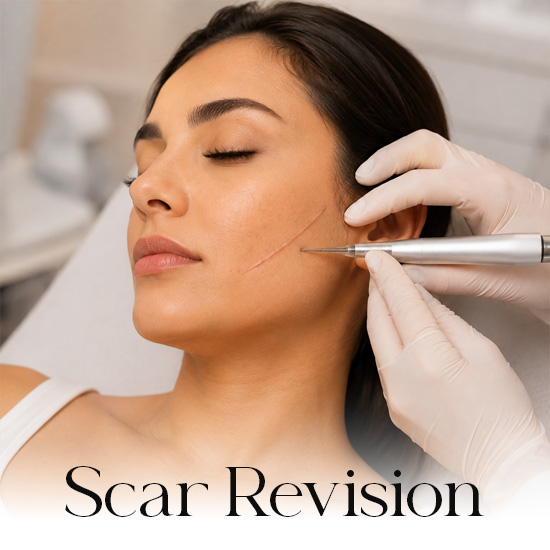
Scar revision includes surgical and non-surgical treatments intended to make a scar less conspicuous and more consistent with the surrounding skin color, texture, and natural lines. No treatment can completely erase a scar. Even surgical revision replaces the original scar with a new scar that is intended to be narrower, flatter, better oriented, or less noticeable.
Treatment may be functional as well as aesthetic. Thick scars and contractures can cause pain, itching, hypersensitivity, restricted movement, or distortion of the eyelid, lip, nose, neck, hand, and joints. In these circumstances, releasing tension, replacing deficient tissue, and restoring function may be more important than the visual appearance alone.
Treatment selection depends on scar type. A red vascular scar may respond to vascular laser treatment; a raised scar may require silicone, pressure, intralesional injection, or laser therapy; a depressed scar may improve with subcision, filler, fat grafting, microneedling, or fractional laser; and a widened, irregular, or contracted scar may require surgical revision, Z-plasty, skin grafting, or flap reconstruction. Many scars respond best to a staged combination of treatments.
Types of Scars
Immature or Red Scar
New scars are commonly red, firm, raised, or sensitive during early healing. Many gradually soften and fade over 12–24 months. Immediate surgery is therefore not required for every recent scar. Earlier intervention may be appropriate for a rapidly growing keloid, functional restriction, structural distortion, or an active healing problem.
Widened or Stretched Scar
A widened scar may result from excessive tension, poor orientation relative to natural skin lines, wound separation, infection, or impaired healing. Excision and layered closure with tension reduction may improve the scar, although recurrent widening or stretch-back remains possible.
Hypertrophic Scar
A hypertrophic scar is raised and thick but usually remains within the boundaries of the original wound. It may be red, itchy, painful, or firm and may partially improve with time.
Potential treatments include:
• Silicone gel or silicone sheeting
• Pressure therapy
• Intralesional corticosteroid injection
• Intralesional 5-fluorouracil or combination treatment in selected cases
• Vascular laser
• Fractional ablative laser
• Cryotherapy for selected lesions
• Surgical revision combined with tension control and adjunctive treatment.
Keloid
A keloid grows beyond the boundaries of the original wound and may continue enlarging long after the initial injury. Pain, itching, and tenderness are common, and recurrence remains possible after treatment. No single treatment is best for every keloid. Location, size, lesion age, skin type, and response to previous treatment should guide management.
Treatment may involve a combination of:
• Intralesional corticosteroids
• 5-fluorouracil or other selected injectable agents
• Cryotherapy
• Silicone or pressure therapy
• Vascular or fractional laser treatment
• Surgical excision with adjunctive therapy
• Postoperative steroid injection
• Radiation therapy in carefully selected cases
Surgical excision alone may be followed by recurrence. Combination treatment and tension-reducing closure techniques may improve outcomes.
Atrophic or Depressed Scar
Atrophic scars lie below the level of the surrounding skin and may follow acne, infection, trauma, or soft-tissue loss.
Common acne-scar patterns include:
• Ice-pick scars: narrow and deep
• Boxcar scars: sharply defined depressions
• Rolling scars: broad depressions tethered by subdermal fibrous bands
Treatment may include subcision, TCA CROSS, punch excision or elevation, microneedling, fractional laser, dermal filler, or fat grafting. One procedure is rarely appropriate for every acne-scar pattern.
Scar Contracture
Scar contractures commonly follow burns or deep wounds and shorten the skin and underlying tissues. They may restrict a joint or distort the eyelid, mouth, neck, or hand.
Treatment may involve:
• Physiotherapy and splinting
• Laser treatment to improve pliability in selected cases
• Surgical release
• Z-plasty
• Local flap reconstruction
• Skin grafting
• Tissue expansion
• Regional or free-flap reconstruction for severe defects
Pigmentary or Vascular Scar
A scar may be:
• Red or vascular
• Hyperpigmented
• Hypopigmented
• Markedly different in color from surrounding skin
A red scar requires a different approach from a dark or pale scar. Vascular lasers may reduce erythema, while pigment-directed treatment must be selected carefully according to skin type. Complete restoration of normal color—particularly in hypopigmented scars—may not be possible.
Non-Surgical Scar Revision
Silicone Gel and Silicone Sheeting
Silicone is widely used to prevent or improve raised scars. Consistent long-term use may reduce height, redness, firmness, itching, or discomfort. Results depend heavily on adherence.
Pressure Therapy
Pressure garments or devices are most often used for burn scars and selected keloids. Treatment generally requires prolonged and consistent use. Excessive or poorly fitted pressure may injure the skin.
Intralesional Injection
Corticosteroids: May reduce scar thickness, itching, and pain. Excessive dosing can cause skin atrophy, telangiectasia, or pigment change.
5-Fluorouracil: May be used alone or with corticosteroids for selected hypertrophic scars and keloids. Injection discomfort, superficial ulceration, and pigmentation may occur.
Other agents: Botulinum toxin and additional scar-modulating agents have been investigated, although indications, dosing, and evidence remain variable. A 2024 clinical review supports individualized and often combined treatment.
Laser Therapy
The laser should be selected according to scar characteristics:
Pulsed-dye laser: commonly used for erythema, vascularity, itching, and selected active raised scars
Fractional CO₂ or Er:YAG: may improve texture, thickness, pliability, and selected contractures
Non-ablative fractional laser: stimulates remodeling with less surface injury
Laser-assisted drug delivery: may enhance delivery of selected topical agents into thick scars
Laser treatment cannot remove a scar, but it may make the scar flatter, softer, less red, less symptomatic, or more flexible.
Microneedling
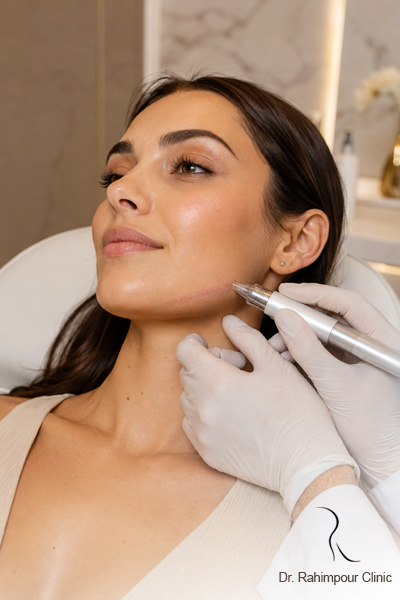
Microneedling creates controlled micro-injury to stimulate collagen remodeling and may benefit selected atrophic scars and flat surgical scars. It should be used cautiously in active keloids or strongly keloid-prone patients.
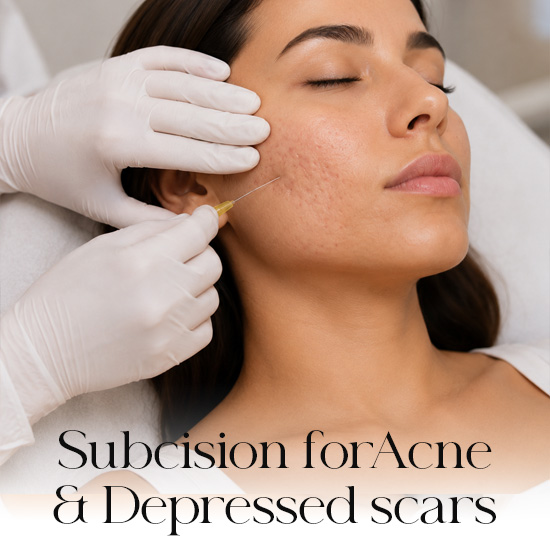
Subcision
Subcision releases fibrous bands tethering a depressed scar. It is particularly useful for rolling acne scars and may be combined with filler, fat grafting, or laser treatment.
Dermal Filler and Fat Grafting
Filler or fat grafting may restore volume beneath depressed scars. Fillers are temporary, while fat retention is variable. Neither method necessarily corrects surface texture, pigmentation, or persistent fibrous tethering when used alone.
TCA CROSS and Chemical Peeling
TCA CROSS may be used for selected ice-pick scars. Superficial chemical peeling may improve limited pigmentation or surface irregularity. Inappropriate treatment may cause post-inflammatory hyperpigmentation, hypopigmentation, or additional scarring.
Camouflage and Medical Tattooing
Medical camouflage or micropigmentation may help selected pale or discolored scars. Perfect color matching is difficult, and pigment may change over time.
Surgical Scar Revision
Excision and Re-closure
The existing scar is removed and the new wound is closed using precise layered techniques and tension reduction. The result remains a scar, but the goal is a narrower, flatter, and better-oriented scar.
Z-Plasty
Z-plasty changes scar direction, increases scar length, and can release contracture. It is particularly useful when a scar crosses natural skin lines or pulls on the eyelid, lip, neck, or a joint.
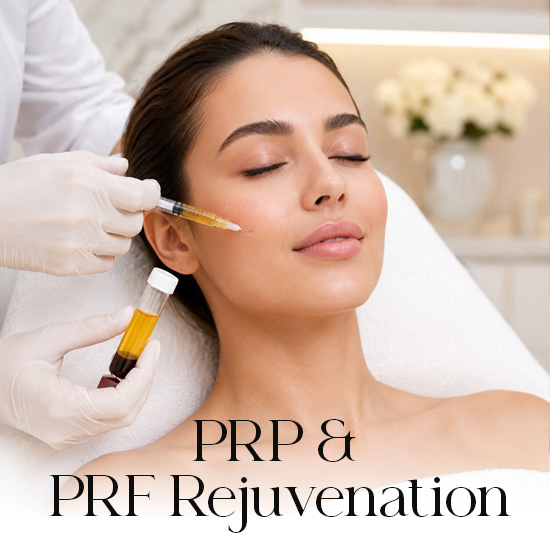
Injectable PRF | i-PRF
Injectable PRF remains liquid for a limited period after centrifugation and must be used before complete fibrin clot formation. The timing of blood collection, processing, transfer, and injection is therefore particularly important.
W-Plasty and Geometric Broken-Line Closure
These techniques break a straight linear scar into multiple smaller irregular segments, improving light dispersion and alignment with surrounding skin lines. Total scar length may increase, although the scar may become less visually obvious.
Flaps and Skin Grafts
Extensive scars, severe contractures, or inadequate healthy skin may require local or regional flaps or skin grafts. These procedures create additional scars at the donor site or reconstructive margins.
Tissue Expansion
A tissue expander may be placed beneath adjacent healthy skin to gradually create additional tissue for replacement of a large scar. Treatment is staged and requires more than one procedure.
Timing of Scar Revision
Scars may continue maturing for 12–24 months. For a stable cosmetic concern, allowing adequate maturation before definitive surgery is often appropriate because redness, firmness, and thickness may improve naturally.
Earlier treatment may be required for:
• Contracture or restricted movement
• Ectropion or eyelid distortion
• Lip traction or oral dysfunction
• Nasal obstruction or deformity
• Rapidly enlarging keloid
• Significant pain, itching, or inflammation
• Scarring that interferes with a child’s growth
• Wound breakdown or active healing complications
Procedure Essentials
Session Duration
Non-surgical treatments commonly 15–60 minutes; surgery from approximately 30 minutes to several hours
Anesthesia
Topical, local, regional, sedation, or general anesthesia depending on the procedure
Recovery Timeline
Injections and laser: several days to approximately two weeks; surgery: commonly 1–3 weeks for initial healing
Aesthetic Results
Gradual; scar maturation and remodeling may continue for 6–18 months or longer
Longevity
Improvement may be long-lasting, but recurrence, widening, or new abnormal scarring remains possible
Repeat Interval
Technique-dependent; injection and laser treatment commonly require several sessions spaced weeks to months apart
Clinical Considerations
Scar type and age, skin type, location, tension, keloid history, functional impairment, and previous treatments
Number of Sessions
Variable; many scars require staged multimodal treatment
Scar-Revision Aftercare
Surgical Wound Care
Contact the treating physician promptly for:
• Severe or increasing pain
• Persistent bleeding
• Sudden swelling or hematoma
• Wound separation
• Spreading or increasing redness
• Warmth, purulent drainage, or unpleasant odor
• Fever or chills
• White, purple, gray, or black skin discoloration
• Blistering, ulceration, or skin necrosis
• New numbness or weakness
• Persistent neuropathic or electric-shock–type pain
• Reduced movement or function compared with the pre-treatment state
• Severe reaction to tape, adhesive, or medication
• Rapid recurrent scar thickening
• A painful enlarging mass or nodule
• Shortness of breath, chest pain, or calf swelling after extensive surgery
Warning Signs
Seek prompt medical assessment for:
• Severe, unusual, or progressively increasing pain
• Severe, one-sided, or progressive swelling
• Spreading redness, warmth, discharge, fever, or chills
• A painful mass, abscess, or increasing firmness
• Blistering, ulceration, skin breakdown, or abnormal discoloration
• White, purple, gray, or black discoloration
• Severe headache, dizziness, fainting, or unusual weakness
• Palpitations or breathing difficulty
• Lip or tongue swelling, urticaria, wheezing, or severe allergic symptoms
• Persistent numbness or neurological weakness
• Visual disturbance, blurred vision, double vision, or ocular pain
• Prolonged bleeding from a venipuncture or injection site
Contraindications & Precautions
Contraindications differ between laser, injection, and surgical treatment.
Principal Contraindications
• Active infection within the treatment area
• Open wounds or uncontrolled necrotic tissue, unless treatment is part of wound debridement and reconstruction
• An uncontrolled medical condition that makes elective anesthesia or surgery unsafe
• Severe or uncontrolled coagulation disorder
• Known hypersensitivity to an essential injected agent, suture, adhesive, or medication when no safe alternative exists
• Inability to comply with wound care and follow-up
• An undiagnosed malignancy or suspicious lesion incorrectly assumed to be a scar
• Any device- or agent-specific contraindication
Conditions Requiring Additional Caution
• Pregnancy: Elective treatment is generally postponed.
• Breastfeeding: Anesthesia and associated medication should be selected individually.
• History of keloid or hypertrophic scarring
• Fitzpatrick skin types IV–VI or previous post-inflammatory hyperpigmentation
• Uncontrolled diabetes
• Cigarette, vaping, or nicotine use
• Immunosuppression
• Active autoimmune or connective-tissue disease
• Vascular disease or impaired tissue perfusion
• Previous radiation therapy to the treatment region
• Bleeding disorder or anticoagulant/antiplatelet treatment
• Systemic corticosteroids or medication that impairs healing
• Malnutrition or protein deficiency
• Previous wound dehiscence or recurrent infection
• Active acne, folliculitis, or inflammation
• Active herpes before laser or perioral treatment
• Current or recent isotretinoin use; timing should be assessed according to the planned procedure.
• A retained foreign body, mesh, implant, or suture reaction beneath the scar
• Self-harm scars or trauma associated with unmet psychological needs
• Unrealistic expectations or an expectation of complete scar removal
• Untreated body dysmorphic disorder
• Inability to avoid sun exposure after laser or pigment-directed treatment
Potential Adverse Effects
Non-Surgical Treatment
• Pain, redness, swelling, and bruising
• Temporary or permanent pigment alteration
• Post-inflammatory hyperpigmentation or hypopigmentation
• Blistering or burns following laser treatment
• Skin atrophy or depression following corticosteroid injection
• Telangiectasia
• Superficial ulceration
• Infection or herpes reactivation
• Nodules or inflammatory reactions
• Inadequate response or need for further treatment
• Worsening scarring in susceptible patients
Surgical Scar Revision
• Bleeding or hematoma
• Infection
• Delayed healing
• Wound dehiscence
• Skin necrosis
• Seroma
• Persistent pain or sensitivity
• Altered sensation or nerve injury
• Asymmetry
• Dog-ear formation or contour irregularity
• Recurrent scar widening
• Hypertrophic scarring or keloid formation
• Pigment alteration
• Need for further revision
• Anesthesia-related complications
• Deep-vein thrombosis or cardiopulmonary complications in extensive surgery
ASPS lists bleeding, infection, delayed healing, altered sensation, persistent pain, injury to deeper structures, scar recurrence, and the possible need for further surgery among recognized risks of scar revision.
Scientific Perspective
• Scar revision improves a scar; it does not erase it.
• Different scar types require different treatments.
• Keloids may recur despite appropriate therapy.
• An immature scar may improve without surgery.
• The same laser and settings are not suitable for every scar or skin type.
• Depressed scars often require a combination of release, volume replacement, and resurfacing.
• Raised scars frequently respond best to combination and repeated therapy.
• Final maturation after surgical revision may require more than one year.
• Incision orientation, tension reduction, tissue perfusion, infection control, and patient adherence are as important as the visible surgical technique.
Important: The objective of scar revision is measurable improvement in appearance, symptoms, or function—not guaranteed scar-free skin. Treatment should be individualized according to scar biology, anatomy, previous healing, and recurrence risk.
Explore Our Non-Surgical Treatments
Advanced minimally inasive solutions to refresh, restore and refine your natural beauty.


Patient Testimonials
Refined Results. Confident Experiences.
Answers to Common Questions
The most suitable treatment depends on your facial anatomy, skin condition, aesthetic goals, and medical history. During consultation, the treatment plan is tailored to your needs to ensure natural-looking and medically appropriate results.
Most non-surgical treatments involve minimal discomfort. Depending on the procedure, topical numbing, local anesthesia, or comfort measures may be used to improve the treatment experience.
Downtime varies depending on the treatment. Some procedures allow an immediate return to daily activities, while others may involve temporary redness, swelling, bruising, or sensitivity for a short period.
Some treatments provide visible improvement shortly after the session, while others develop more gradually over several days or weeks. The timing depends on the treatment type and the body’s natural response.
The longevity of results varies based on the procedure, treatment area, skin quality, and individual metabolism. Some treatments may last several months, while others may require periodic maintenance for optimal results.