Fat Injection
Fat Grafting & Stromal Vascular Fraction
Fat Injection
Facial fat grafting, or autologous fat transfer, is a surgical procedure used to restore lost facial volume, improve facial balance, and correct selected soft-tissue depressions. Fat is commonly harvested from the abdomen, flanks, or thighs using gentle liposuction, processed, and transferred into selected facial tissue planes. Because the graft is obtained from the patient’s own body, allergy to the fat itself is highly unlikely. However, fat grafting remains a surgical procedure involving a donor site, anesthesia, postoperative recovery, and recognized complications.
Facial fat grafting may restore volume in the cheeks, midface, temples, chin, jawline, prejowl sulcus, nasolabial region, and selected facial depressions. In carefully selected patients, it may also be used for limited correction of the eyelid–cheek junction, depressed scars, asymmetry, or tissue deficiency following trauma, surgery, or congenital conditions. Fat transfer is often combined with facelift or blepharoplasty surgery to address both tissue descent and age-related volume loss.
The initial result reflects transferred fat, postoperative swelling, and sometimes conservative overcorrection. A proportion of the transferred fat is resorbed during the first weeks and months, while cells that develop an adequate blood supply may survive long term. In a meta-analysis of 27 studies involving 1,011 patients, reported facial volume retention ranged from 26% to 83%, with a pooled mean of approximately 47%. Complete graft survival and an exact final volume cannot therefore be guaranteed.
Surviving fat may behave like other living adipose tissue and respond to aging, hormonal changes, and body-weight fluctuation. Fat-grafting results may last longer than many temporary dermal fillers, but the procedure is less reversible..
Safety depends on patient selection, donor-site management, harvesting and processing methods, fat-particle size, injected volume, tissue plane, and detailed knowledge of facial vascular and neural anatomy. Fat should be injected slowly in small aliquots through controlled tissue pathways. RF may be used on various areas of the face and body, including the face, jawline, neck, and selected body areas. Depending on the device and technology, treatment goals may include improvement of skin laxity, fine lines, wrinkles, skin texture, and, with selected devices, acne scars or limited contouring. Results typically develop gradually as collagen remodeling continues over the following weeks and months.
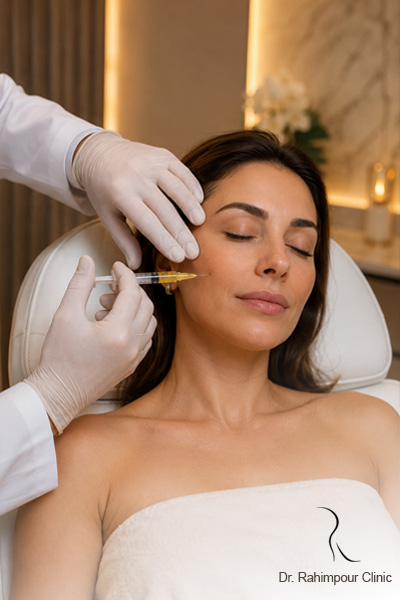
Structural Fat Grafting
Structural fat grafting uses relatively intact fat parcels delivered in small quantities through multiple tissue layers. This maximizes contact with vascularized recipient tissue and provides structural support and volume.
It is commonly used for the cheeks, midface, temples, chin, jawline, and soft-tissue depressions. Depositing a large bolus of fat may reduce central perfusion and increase the risk of fat necrosis, oil cysts, calcification, and contour irregularity.
Microfat
Microfat contains smaller fat parcels and may be used in delicate facial regions or relatively superficial planes. It still contains viable adipocytes and may produce a volumizing effect. Excessively superficial placement or localized accumulation may result in visible irregularity, nodules, or contour deformity.
Nanofat
Nanofat is produced through mechanical processing, emulsification, and filtration of harvested fat. Many mature adipocytes are disrupted during this process, meaning that nanofat is not intended to produce reliable structural volume.
Its proposed applications include limited improvement in skin quality, very fine lines, dyschromia, and selected scars. Published studies have reported clinical and histological changes, but techniques and outcome measurements remain heterogeneous, and standardized long-term evidence is limited. One review concluded that the available evidence could not reliably support broad promotional claims of predictable skin rejuvenation.
Nanofat is not a conventional volumizing filler, purified SVF, or pure stem-cell injection.
Stromal Vascular Fraction (SVF)
Stromal vascular fraction is a heterogeneous cellular fraction isolated from adipose tissue. Following fat harvesting, the tissue is processed to separate the stromal-vascular component from mature adipocytes and other tissue elements.
SVF may contain populations of:
• Adipose-derived stromal/stem cells
• Endothelial cells
• Endothelial progenitor cells
• Pericytes
• Fibroblasts
• Macrophages
• Lymphocytes
• Other stromal and immune cells
Procedure Essentials
Session Duration
Usually 60–180 minutes; SVF preparation may require additional processing time
Anesthesia
Local or tumescent anesthesia with or without sedation; general anesthesia may be used for extensive procedures
Recovery Timeline
Usually 1–2 weeks of visible swelling and bruising; mild swelling may persist longer
Aesthetic Results
Partly immediate; facial fat-grafting results are better assessed after graft stabilization over approximately 3–6 months
Longevity
Surviving fat may remain long term; the independent longevity of nanofat or SVF effects is not clearly predictable
Repeat Interval
Further treatment, if required, is considered after complete stabilization over several months
Clinical Considerations
Vascular anatomy, donor site, fat quality, particle size, injection plane, sterility, and processing technique
Number of Sessions
Commonly one initial procedure; variable resorption or undercorrection may require a secondary session
Fat Injection Aftercare:
Facial Treatment Area
• Head Elevation: Sleep on your back with the head elevated during the first several nights.
• Direct Pressure: Avoid sleeping on, massaging, or applying unnecessary pressure to treated areas.
• Compresses: Use only the type and timing of compress recommended by the surgeon. Excessive cold or firm pressure may be inappropriate over grafted tissue.
• Swelling: Mild-to-marked swelling is expected during early recovery.
• Bruising: Facial and donor-site bruising may take one to two weeks or longer to improve.
• Early Fullness: The initial appearance is fuller than the final result because of swelling and subsequent fat resorption.
• Massage: Do not massage grafted areas unless specifically instructed.
• Cleansing: Cleanse gently and keep cannula entry sites clean.
• Makeup: Resume makeup after access sites have closed and medical approval has been given.
• Eyeglasses: Heavy glasses may need to be temporarily restricted after treatment of the cheeks, nose, or periorbital region.
• Facial Treatments: Avoid massage, gua sha, RF, HIFU, laser, microneedling, and other pressure- or energy-based treatments until cleared.
• Facial Movement: Avoid trauma, pressure, and excessive repetitive movement during early healing.
• Assessing Results: Do not judge the result during the first weeks, while swelling and graft resorption continue.
Donor Site
• Compression: Wear the prescribed compression garment according to the surgical protocol.
• Dressings: Keep liposuction access sites clean and dry and change dressings as instructed.
• Drainage: Limited fluid leakage may occur initially; persistent or increasing drainage should be reported.
• Soreness: Bruising, swelling, tenderness, and stiffness are expected at the donor site.
• Lymphatic Massage: Perform only when prescribed and at the appropriate stage.
• External Pressure: Avoid clothing or devices that create excessive or irregular pressure.
• Seroma: A soft, fluctuant, or progressively enlarging swelling requires assessment.
• Irregularity: Severe depression, contour irregularity, or abnormal firmness should be reported.
Activity and Lifestyle
• Walking: Gentle walking is usually encouraged when medically appropriate.
• Exercise: Avoid strenuous exercise, running, and heavy lifting until cleared.
• Excessive Heat: Avoid saunas, hot tubs, and very hot showers during early recovery.
• Sun Exposure: Protect bruised and inflamed skin from direct sunlight and use sunscreen once the skin has closed.
• Nicotine: Smoking, vaping, and nicotine may impair circulation and healing and should be discontinued according to the surgeon’s protocol.
• Alcohol: Alcohol may increase swelling, bruising, and dehydration.
• Stable Weight: Significant weight gain or loss may alter grafted facial volume.
• Medication: Take prescribed antibiotics, analgesics, and other medication exactly as directed.
• Blood-Thinning Medication: Do not stop or begin aspirin, NSAIDs, anticoagulants, antiplatelet medication, or bleeding-related supplements without medical advice.
• Follow-up: Attend scheduled visits to evaluate healing, infection, fat necrosis, symmetry, and volume stabilization.
Warning Signs
Seek immediate medical care for:
• Reduced vision, blurred vision, double vision, or visual loss
• Ocular pain, sudden eyelid drooping, or impaired eye movement
• Sudden severe headache, speech disturbance, limb weakness, or other neurological symptoms
• Shortness of breath, chest pain, sudden coughing, or reduced consciousness
• Severe or progressively increasing pain
• White, purple, gray, or black skin discoloration
• Cool skin or mottled/reticular discoloration
• Sudden, severe, or one-sided swelling
• Spreading redness, warmth, purulent discharge, fever, or chills
• Persistent bleeding
• A firm, painful, or enlarging mass
• A soft fluctuant swelling suggesting seroma
• Severe or progressive depression, asymmetry, or contour deformity
• Blistering, ulceration, or wound breakdown
• Severe numbness, facial-muscle weakness, or neuropathic pain
• Calf pain or swelling suggestive of deep-vein thrombosis
Contraindications & Precautions
• Active infection at the donor or recipient site
• Open wounds or severe active skin disease
• Severe or uncontrolled coagulation disorder
• An uncontrolled medical condition that makes liposuction, anesthesia, or elective surgery unsafe
• Insufficient donor fat for safe harvesting
• Inability to comply with postoperative care and follow-up
• Severe hypersensitivity to required anesthetic or operative medication when no safe alternative exists
• Inability to provide appropriate sterile harvesting, processing, or injection
• Use of a technique or product that does not comply with applicable local regulations
Conditions Requiring Additional Caution
• Pregnancy: Elective cosmetic surgery is not performed during pregnancy.
• Breastfeeding: Timing should be individualized according to anesthesia and postoperative medication.
• Cigarette, vaping, or nicotine use
• Uncontrolled diabetes
• Uncontrolled cardiac, pulmonary, renal, or hepatic disease
• Previous deep-vein thrombosis, pulmonary embolism, or thrombophilia
• Bleeding disorders or anticoagulant/antiplatelet treatment
• Immunosuppression or medication that impairs healing
• Active autoimmune or connective-tissue disease
• History of keloid or hypertrophic scarring
• Previous infection, fat necrosis, or significant adverse reaction following fat grafting
• Facial palsy, nerve injury, or sensory abnormality
• Previous surgery, filler, thread lifting, or fat grafting
• Permanent filler, silicone, biopolymer, or unknown injectable material
• Previous radiation therapy to the donor or recipient site
• Very thin skin or limited soft-tissue coverage
• Vascular disease or compromised regional perfusion
• Prominent eyelid bags, festoons, or malar edema when under-eye treatment is considered
• Active malignancy or a suspicious donor- or recipient-site lesion
• Active weight loss, planned bariatric surgery, or marked weight fluctuation
• Unrealistic expectations, including complete graft survival or total tissue regeneration
• Untreated body dysmorphic disorder or psychological illness affecting informed consent
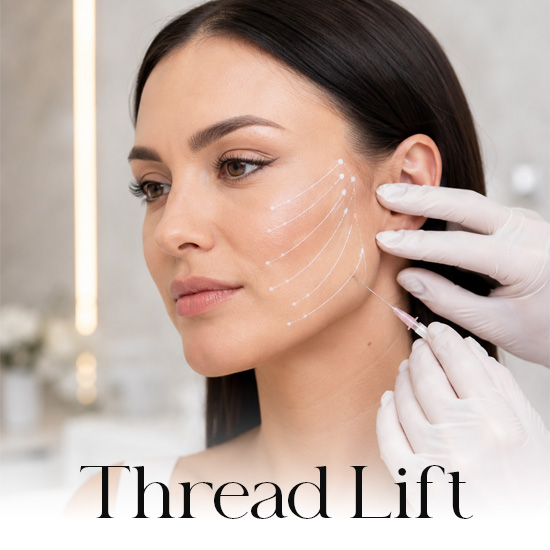
Explore Our Non-Surgical Treatments
Advanced minimally inasive solutions to refresh, restore and refine your natural beauty.
Patient Testimonials
Refined Results. Confident Experiences.
Answers to Common Questions
The most suitable treatment depends on your facial anatomy, skin condition, aesthetic goals, and medical history. During consultation, the treatment plan is tailored to your needs to ensure natural-looking and medically appropriate results.
Most non-surgical treatments involve minimal discomfort. Depending on the procedure, topical numbing, local anesthesia, or comfort measures may be used to improve the treatment experience.
Downtime varies depending on the treatment. Some procedures allow an immediate return to daily activities, while others may involve temporary redness, swelling, bruising, or sensitivity for a short period.
Some treatments provide visible improvement shortly after the session, while others develop more gradually over several days or weeks. The timing depends on the treatment type and the body’s natural response.
The longevity of results varies based on the procedure, treatment area, skin quality, and individual metabolism. Some treatments may last several months, while others may require periodic maintenance for optimal results.