Facial Rejuvenation
Facial Rejuvenation
facial rejuvenation includes a range of individualized treatments intended to improve skin hydration, texture, radiance, fine lines, and selected early signs of aging. Product selection, injection volume, depth, and technique are therefore especially important in this area. Appropriate treatment begins with separate assessment of skin quality, tear-trough anatomy, fat-pad prominence, eyelid bags, edema, pigmentation, vascular show, and facial-muscle activity.
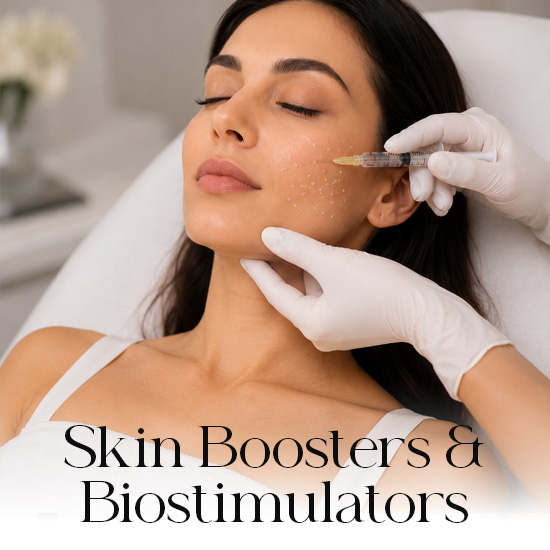
Products described as mesogels, skin boosters, injectable moisturizers, or hyaluronic-acid hydrators are generally not intended to produce major facial volume or alter facial shape. They typically deliver small quantities of hyaluronic acid or other compounds into relatively superficial tissue planes with the aim of improving hydration, softness, radiance, and very fine lines. A 2025 meta-analysis found that local HA injection improved skin hydration and radiance, but did not demonstrate significant improvement in elasticity or melanin index. These treatments should therefore not be described as complete skin regeneration or a definitive treatment for pigmentation and laxity.
Results are typically subtle and gradual. Patients may notice smoother, more hydrated, and more luminous skin, but a mesogel does not replace volumizing filler for structural volume loss, botulinum toxin for dynamic lines, laser treatment for selected surface and pigmentary concerns, or blepharoplasty for significant eyelid bags and excess skin. Natural periorbital rejuvenation often requires a staged or multimodal approach.
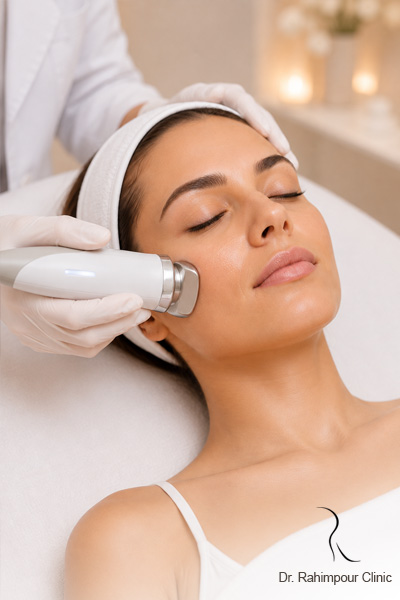
What Is a Mesogel?
The term mesogel does not represent a single standardized scientific category. It may be used commercially for formulations containing one or more of the following:
Non-Cross-Linked Hyaluronic Acid
Free or non-cross-linked HA formulations are generally used for temporary improvement in skin hydration and superficial quality. Their persistence is usually shorter than that of cross-linked volumizing fillers, and a series of sessions is commonly recommended.
Stabilized or Lightly Cross-Linked HA Skin Boosters
These products contain more persistent hyaluronic acid but are not primarily designed to create significant volume. They are commonly administered as microdroplets or intradermal injections to improve hydration, radiance, and superficial lines. Controlled studies of selected formulations have demonstrated improvements in hydration, radiance, and fine wrinkles, but results from one named product should not be generalized to all products marketed as skin boosters.
HA Combined With Amino Acids, Vitamins or Antioxidants
Some formulations include amino acids, vitamins, minerals, or antioxidants. The presence of these ingredients does not independently establish clinical efficacy. Evidence, formulation quality, sterility, concentration, and regulatory status differ substantially between products.
Polynucleotides and PDRN
Polynucleotide- and PDRN-based injectables are used in some countries for skin-quality improvement, including treatment of thin periorbital skin. Small studies and selected trials have reported improvements in hydration, texture, elasticity, or fine wrinkles, but available evidence remains limited and protocols are not standardized. These products should not be described as stem-cell therapy, exosome therapy, or guaranteed tissue regeneration.
Bio-Remodeling HA Products
Selected high-concentration HA products are marketed for bio-remodeling and use specific injection patterns. Their rheology, indications, and recommended injection technique differ from conventional mesotherapy and volumizing fillers. They should be administered according to product-specific instructions and individual anatomy.
PRP
PRP is prepared from the patient’s own blood. Although it is injected into facial or periorbital skin, it is not a mesogel and differs in composition, mechanism, evidence, and contraindications.
Potential Indications
• Improvement of skin hydration and superficial dryness
• Modest improvement in softness and radiance
• Limited reduction of very fine lines and crepey texture
• Improvement in selected facial, neck, or décolletage skin-quality concerns
• Limited improvement in thin, finely wrinkled periorbital skin in selected patients
• Adjunctive use within a combined facial-rejuvenation plan
• Skin maintenance alongside appropriate skincare and other procedures
What Mesogels Do Not Reliably Treat
• Significant excess eyelid skin
• Prominent orbital-fat bags
• Deep tear-trough deformity caused by structural volume deficiency
• Marked dynamic crow’s-feet
• Deep or genetically determined pigmentation
• Prominent superficial vessels
• Moderate-to-severe facial or neck laxity
• Deep scars or wrinkles
• Significant midface, cheek, or temporal volume loss
Procedure Essentials
Session Duration
Usually approximately 20–45 minutes, depending on the product and treatment area
Anesthesia
Commonly topical anesthesia or none, depending on technique and patient comfort
Recovery Timeline
Minimal downtime; small papules, redness, swelling, or bruising usually improve over several hours to a few days
Aesthetic Results
Gradual; improved hydration and radiance may develop over days to weeks
Longevity
Temporary and product-dependent; commonly several months, but no single duration applies to all formulations
Repeat Interval
Product- and protocol-dependent; initial treatments may be spaced several weeks apart, with less frequent maintenance
Clinical Considerations
Accurate diagnosis, product characteristics, injection plane, thin periorbital skin, edema history, and lymphatic drainage
Number of Sessions
Often 2–4 initial sessions; selected products use different schedules or fewer treatments
Mesogel and Skin-Booster Aftercare
• Follow Individual Instructions: Product- and technique-specific medical instructions take priority over general recommendations.
• Touching and Pressure: Avoid frequent touching, massage, rubbing, or significant pressure during the initial hours.
• Injection Papules: Small intradermal bumps may remain visible for several hours or a few days.
• Do Not Manipulate: Do not squeeze, puncture, or massage papules unless specifically instructed.
• Cleansing: Cleanse gently with lukewarm water and a mild product, without scrubbing.
• Makeup: Delay makeup until injection sites have closed and according to medical advice.
• Active Skincare: Temporarily avoid retinoids, AHA/BHA products, scrubs, benzoyl peroxide, and irritating or fragranced products.
• Moisturizer: Use a gentle, non-irritating moisturizer as advised.
• Sun Protection: Apply broad-spectrum sunscreen and limit direct sun exposure.
• Cold Compresses: Gentle indirect cooling may be used when approved; avoid pressure over treated areas.
• Exercise: Avoid strenuous exercise and excessive sweating on the day of treatment or for the recommended period.
• Excessive Heat: Avoid saunas, hot tubs, facial steaming, very hot showers, and excessive environmental heat during early recovery.
• Alcohol: Alcohol may increase redness or bruising and is best limited around treatment.
• Sleeping Position: Avoid direct pressure on the face and periorbital areas during the first night.
• Facial Massage: Avoid facial massage, gua sha, facial rollers, and similar devices until cleared.
• Dental Procedures: Discuss the timing of elective invasive dental treatment with the treating physician.
• Other Procedures: Delay laser, RF, HIFU, microneedling, chemical peeling, fillers, and Botox until inflammation has resolved and treatment has been approved.
• Medication: Do not stop or modify aspirin, NSAIDs, anticoagulants, antiplatelet medication, or other prescribed drugs without consulting the prescribing physician.
• Periorbital Swelling: Mild swelling can occur, but marked, persistent, or increasing edema requires assessment.
• Early Asymmetry: Swelling or injection papules may temporarily create apparent asymmetry.
• Final Assessment: Do not judge the result immediately; both the product and tissue require time to settle.
• Follow-up: Review may be recommended to assess skin response, edema, nodules, symmetry, and the timing of subsequent sessions.
Warning Signs
Seek immediate medical assessment for:
• Severe, unusual, or progressively increasing pain
• Blanching or marked paleness of the skin
• Mottled, purple, or reticular discoloration
• Cool skin or delayed capillary refill
• Blistering, ulceration, abnormal crusting, or darkening of the skin
• Severe, one-sided, or progressive facial or periorbital swelling
• Spreading redness, warmth, discharge, fever, or signs of infection
• A painful mass, inflammatory nodule, or persistent firmness
• Persistent blue-gray discoloration or visible product irregularity
• Reduced vision, blurred vision, double vision, ocular pain, or visual-field disturbance
• Sudden eyelid drooping, severe headache, or neurological symptoms
• Lip or tongue swelling, urticaria, wheezing, or breathing difficulty
Contraindications & Precautions
Principal Contraindications
• Active bacterial, viral, or fungal infection within the treatment area
• Active herpes simplex involving the perioral or periorbital region
• Open wounds, ulceration, or significant skin-barrier disruption
• Known hypersensitivity to HA, an active ingredient, preservative, local anesthetic, or any formulation component
• Lidocaine allergy when a lidocaine-containing product is used
• Severe or uncontrolled coagulation disorder
• Use of a product with unknown origin, composition, storage conditions, or sterility
• An uncontrolled medical condition that makes elective treatment unsafe
• Any product-specific contraindication stated by the manufacturer
Conditions Requiring Additional Caution or Medical Assessment
• Pregnancy: Elective cosmetic injections are generally postponed because safety data are limited.
• Breastfeeding: Treatment should be considered individually according to the injected agent.
• Previous anaphylaxis or multiple significant drug allergies
• Active or uncontrolled autoimmune or connective-tissue disease
• Immunosuppression
• Uncontrolled diabetes or impaired wound healing
• Anticoagulant or antiplatelet therapy
• Thrombocytopenia or platelet dysfunction
• History of recurrent herpes; prophylaxis may be indicated for selected treatment areas.
• Active dermatitis, eczema, severe rosacea, inflammatory acne, or other skin disease
• Previous granuloma, delayed inflammatory reaction, or nodule following injectable treatment
• Permanent filler, silicone, biopolymer, or unknown injectable material within the treatment area
• Recent filler treatment, thread lifting, fat grafting, laser treatment, or facial surgery
• Previous facial or malar edema or impaired periorbital lymphatic drainage
• Prominent eyelid bags or festoons, which may worsen following hydrophilic HA injection
• Very thin skin with increased risk of product visibility or Tyndall effect
• Previous eyelid or orbital surgery or altered periorbital anatomy
• Active ocular disease, eyelid infection, or conjunctivitis
• Unexplained visual symptoms or active neurological symptoms
• History of keloid formation or hypertrophic scarring
• Unrealistic expectations, including significant lifting, complete correction of dark circles, or replacement of blepharoplasty
Conditions Requiring Additional Caution or Medical Assessment
• Pregnancy: Elective mesotherapy is generally postponed. Dutasteride, finasteride, and other antiandrogen exposure may be contraindicated or inappropriate during pregnancy.
• Planning Pregnancy: Drug-specific reproductive risks require careful assessment when dutasteride or finasteride is proposed.
• Breastfeeding: Because formulations vary and safety data are limited, treatment should be considered individually.
• Multiple drug allergies or previous anaphylaxis
• Active or uncontrolled autoimmune disease
• Immunosuppression
• Uncontrolled diabetes or impaired wound healing
• Anticoagulant or antiplatelet therapy
• Thrombocytopenia or platelet dysfunction
• Significant liver or kidney disease, particularly when pharmaceuticals with systemic metabolism are injected
• Cardiac disease, hypotension, or antihypertensive therapy when the formulation may have systemic effects
• Active scarring alopecia, where delay in appropriate anti-inflammatory treatment may result in permanent follicular loss
• Active alopecia areata, which requires diagnosis-specific treatment planning
• Severe active psoriasis, seborrheic dermatitis, eczema, or other inflammatory scalp disease
• History of keloid formation or hypertrophic scarring
• Previous inflammatory reaction, granuloma, or necrosis following scalp injection
• Recent hair transplantation, surgery, microneedling, or laser treatment of the scalp
• Concurrent use of multiple hair-loss medications without assessment of interactions or cumulative adverse effects
• Unrealistic expectations, including anticipated complete regrowth in areas without viable follicles
• Undiagnosed hair loss or warning signs such as scarring, severe inflammation, thick scale, pain, drainage, or rapid sudden shedding
Polynucleotide-Specific Precautions
The product’s origin and precise composition should be identified. With fish-derived formulations, a history of severe fish allergy or hypersensitivity to product components should be reviewed. Safety cannot be assumed solely from the general term “polynucleotide.”
Potential Adverse Effects
Common and usually temporary effects include injection discomfort, erythema, swelling, tenderness, itching, bruising, pinpoint bleeding, and small injection papules. Swelling may be more noticeable or prolonged around the eyes than in other facial areas.
Less common adverse effects include prolonged edema, malar edema, asymmetry, Tyndall effect, lumps, nodules, contour irregularity, infection, herpes reactivation, granuloma, and delayed inflammatory reactions. With HA products, selected complications related to unwanted product deposition may sometimes be treated with hyaluronidase, although dissolving treatment is itself a medical procedure with potential adverse effects.
Rare but serious complications include vascular occlusion, ischemia, skin necrosis, and visual impairment up to blindness. Safety depends on conservative volume, appropriate product and tissue-plane selection, detailed knowledge of vascular anatomy, and the ability to recognize and treat complications immediately.
Important: Mesogels and skin boosters are intended to provide injectable hydration or limited improvement in skin quality. They do not produce a facelift, reliably correct significant laxity, or permanently eliminate dark circles and wrinkles. A commercial product name or the presence of hyaluronic acid, vitamins, peptides, or other ingredients does not by itself guarantee efficacy or safety. Only a clearly identified, sterile, appropriately authorized product suitable for the intended anatomical area should be used.
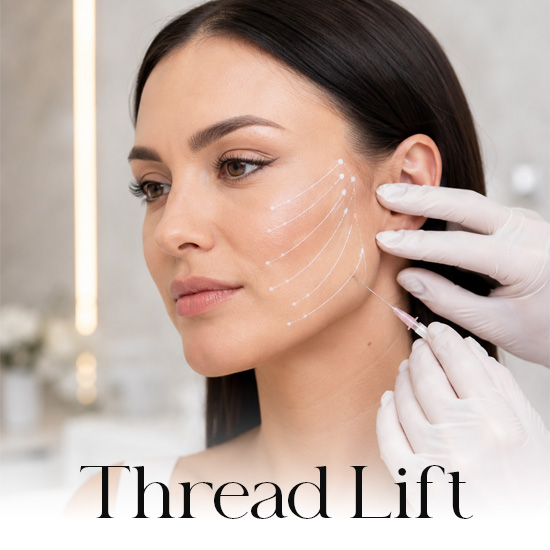
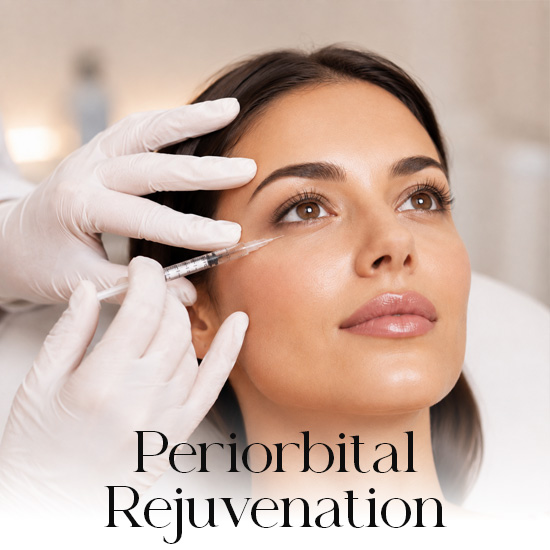
Explore Our Non-Surgical Treatments
Advanced minimally inasive solutions to refresh, restore and refine your natural beauty.

Patient Testimonials
Refined Results. Confident Experiences.



Answers to Common Questions
The most suitable treatment depends on your facial anatomy, skin condition, aesthetic goals, and medical history. During consultation, the treatment plan is tailored to your needs to ensure natural-looking and medically appropriate results.
Most non-surgical treatments involve minimal discomfort. Depending on the procedure, topical numbing, local anesthesia, or comfort measures may be used to improve the treatment experience.
Downtime varies depending on the treatment. Some procedures allow an immediate return to daily activities, while others may involve temporary redness, swelling, bruising, or sensitivity for a short period.
Some treatments provide visible improvement shortly after the session, while others develop more gradually over several days or weeks. The timing depends on the treatment type and the body’s natural response.
The longevity of results varies based on the procedure, treatment area, skin quality, and individual metabolism. Some treatments may last several months, while others may require periodic maintenance for optimal results.