Hair Mesotherapy
Hair Mesotherapy
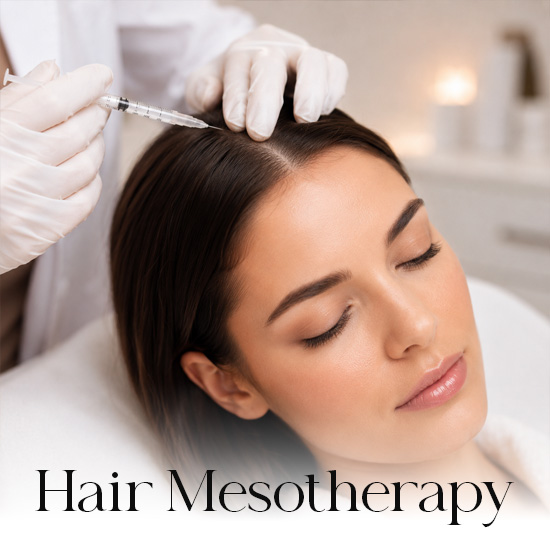
Hair mesotherapy is a minimally invasive procedure in which small quantities of a selected medication or formulation are delivered through multiple superficial injections into the scalp. The concept is to place an active substance close to the hair follicles and produce a localized effect within the treated area. Hair mesotherapy is not a single standardized product or protocol; formulations may contain very different substances, including minoxidil, dutasteride, amino acids, peptides, vitamins, hyaluronic acid, or proprietary commercial mixtures.
Hair mesotherapy has primarily been studied in patients with androgenetic alopecia or pattern hair loss. Some studies have reported reduced shedding or modest improvement in hair density and shaft thickness following selected formulations. However, available studies are generally small, and injection agents, doses, depths, techniques, session intervals, and outcome measurements vary considerably. Results from a study of one specific agent should therefore not be generalized to all forms of mesotherapy.
Mesotherapy should not be performed before the cause of hair loss has been assessed. Hair shedding or thinning may result from androgenetic alopecia, telogen effluvium, iron deficiency, thyroid disease, autoimmune disorders, infection, medication, physiological stress, scarring alopecia, or other conditions. Successful treatment begins with an accurate diagnosis, because injecting a nutritional or pharmaceutical mixture cannot correct an untreated underlying disorder.
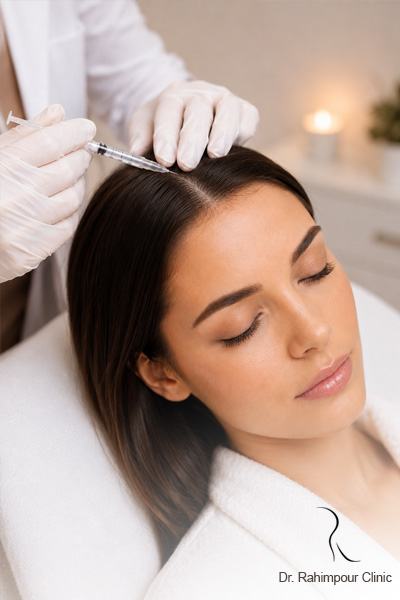
Hair mesotherapy may be considered as an adjunctive option in selected patients, but it should not be presented as a guaranteed, permanent, or universally effective replacement for established hair-loss treatments. Depending on the patient’s diagnosis, sex, age, and medical history, better-supported options for pattern hair loss may include topical minoxidil, selected antiandrogen therapy, low-level light therapy, and hair transplantation. Treatment should be selected after diagnosis, assessment of disease severity, and informed discussion of the limitations of available evidence.
Agents Used in Hair Mesotherapy
Minoxidil: Intradermal minoxidil has been used in some mesotherapy protocols, but there is no universally standardized injectable dose or schedule. The established approval and strongest evidence for minoxidil primarily relate to topical formulations. Intradermal use requires caution regarding local reactions, dosage, and possible systemic absorption.
Dutasteride: Dutasteride inhibits 5-alpha-reductase and reduces conversion of testosterone to dihydrotestosterone. Intradermal dutasteride has been investigated for androgenetic alopecia, but protocols remain heterogeneous. This use should be considered off-label and requires appropriate consent and assessment of drug-specific contraindications.
Vitamins, Amino Acids & Minerals: These are included in many commercial cocktails, but the presence of a nutrient in a formula does not by itself establish clinical efficacy. When a genuine nutritional deficiency exists, identifying and correcting the systemic deficiency is generally more important than local injection.
Peptides, Growth Factors & Biomimetic Compounds: These are present in selected mesotherapy products, although composition, manufacturing quality, and evidence vary considerably. They should not be presented as equivalent to platelet-rich plasma, stem-cell therapy, or exosome therapy.
Hyaluronic Acid: Hyaluronic acid may be included as a carrier or for hydration, but it is not independently established as a treatment for follicular miniaturization.
PRP: Although PRP is injected into the scalp, it is prepared from the patient’s own blood and differs from drug- or vitamin-based mesotherapy in composition, mechanism, and evidence.
Procedure Essentials
Session Duration
Usually approximately 20–45 minutes, depending on treatment area and number of injections
Anesthesia
Usually none or topical anesthesia, depending on patient comfort and the injected formulation
Recovery Timeline
Minimal downtime; discomfort, redness, swelling, or pinpoint injection marks may persist for 1–3 days
Aesthetic Results
Gradual and not guaranteed; meaningful hair assessment generally requires several months
Longevity
Variable and dependent on the cause of hair loss, injected agent, and continuation of underlying treatment
Repeat Interval
No universally accepted protocol; initial sessions are often spaced several weeks apart and adjusted according to response
Clinical Considerations
Accurate diagnosis, injected agent and dose, allergy history, medications, and scalp health
Number of Sessions
Variable; several initial sessions are used in many protocols, but no fixed evidence-based number applies to all patients
Hair Mesotherapy Aftercare
• Touching the Scalp: Avoid unnecessary touching, scratching, or pressure over injection sites during the first hours.
• Hair Washing: Wash the hair and scalp only at the time advised by the treating physician.
• Gentle Cleansing: Use lukewarm water, a mild shampoo, and gentle movements during the first wash.
• Massage: Do not massage the scalp unless specifically instructed for the formulation used.
• Do Not Pick: Avoid scratching or removing small crusts from injection sites.
• Hair Products: Avoid hair dye, gel, spray, dry shampoo, and irritating scalp products during the initial period.
• Chemical Hair Treatments: Postpone bleaching, coloring, keratin treatment, and other strong chemical procedures until scalp inflammation has resolved.
• Exercise: Avoid strenuous exercise and excessive sweating on the day of treatment.
• Excessive Heat: Avoid saunas, hot tubs, very hot showers, and direct steam during early recovery.
• Sun Exposure: Protect areas of exposed scalp from prolonged direct sunlight.
• Swimming: Avoid pools, hot tubs, and public water until injection sites have closed and irritation has settled.
• Headwear: Avoid tight, unclean, or highly abrasive hats during the initial hours.
• Redness and Tenderness: Mild redness, burning, tenderness, or localized swelling may occur temporarily.
• Small Papules: Superficial bumps at injection sites may remain visible for several hours or a short period.
• Pinpoint Bleeding: Minor bleeding or crusting may occur and should not be manipulated.
• Discomfort: Use only the analgesic recommended by the treating physician.
• Blood-Thinning Medication: Do not stop or begin aspirin, NSAIDs, anticoagulants, or antiplatelet medication without consulting the prescribing physician.
• Topical Treatment: Resume topical minoxidil, retinoids, or other scalp medication according to the individualized plan.
• Other Scalp Procedures: Delay microneedling, laser, or other scalp procedures until inflammation has resolved.
• Assessing Results: Do not judge treatment during the first days or weeks. Hair growth cycles are slow, and meaningful assessment generally requires standardized photography and several months of follow-up.
• Continue Core Treatment: Do not discontinue established hair-loss medication without medical advice; mesotherapy does not automatically replace maintenance therapy.
• Follow-up: Periodic assessment of hair density, shaft diameter, shedding, and scalp reactions is recommended.
Warning Signs
Contact the treating physician promptly for:
• Severe or progressively increasing pain
• Spreading redness, warmth, or progressive swelling
• Purulent discharge, unpleasant odor, fever, or chills
• An abscess or painful enlarging mass
• Blistering, ulceration, or dark discoloration of the scalp
• Severe itching, urticaria, facial swelling, or allergic symptoms
• Breathing difficulty, wheezing, or swelling of the lips or tongue
• Severe headache, dizziness, palpitations, low blood pressure, or unusual weakness
• Sudden localized hair loss at an injection site
• Scarring, skin atrophy, or scalp depression
• Persistent numbness, neuropathic pain, or neurological symptoms
• Marked and persistent worsening of hair shedding
Contraindications & Precautions
Because hair-mesotherapy formulations are not uniform, contraindications must be assessed separately for every injected agent.
Principal Contraindications
• Active bacterial, viral, or fungal scalp infection
• Active folliculitis or a scalp abscess
• Open wounds, ulceration, or significant skin-barrier disruption
• Known hypersensitivity to the active agent, preservative, local anesthetic, or any formulation component
• Severe or uncontrolled coagulation disorder
• An uncontrolled medical condition that makes an elective procedure unsafe
• Use of a product with unknown composition, sterility, or origin
• Any drug- or manufacturer-specific contraindication
Conditions Requiring Additional Caution or Medical Assessment
• Pregnancy: Elective mesotherapy is generally postponed. Dutasteride, finasteride, and other antiandrogen exposure may be contraindicated or inappropriate during pregnancy.
• Planning Pregnancy: Drug-specific reproductive risks require careful assessment when dutasteride or finasteride is proposed.
• Breastfeeding: Because formulations vary and safety data are limited, treatment should be considered individually.
• Multiple drug allergies or previous anaphylaxis
• Active or uncontrolled autoimmune disease
• Immunosuppression
• Uncontrolled diabetes or impaired wound healing
• Anticoagulant or antiplatelet therapy
• Thrombocytopenia or platelet dysfunction
• Significant liver or kidney disease, particularly when pharmaceuticals with systemic metabolism are injected
• Cardiac disease, hypotension, or antihypertensive therapy when the formulation may have systemic effects
• Active scarring alopecia, where delay in appropriate anti-inflammatory treatment may result in permanent follicular loss
• Active alopecia areata, which requires diagnosis-specific treatment planning
• Severe active psoriasis, seborrheic dermatitis, eczema, or other inflammatory scalp disease
• History of keloid formation or hypertrophic scarring
• Previous inflammatory reaction, granuloma, or necrosis following scalp injection
• Recent hair transplantation, surgery, microneedling, or laser treatment of the scalp
• Concurrent use of multiple hair-loss medications without assessment of interactions or cumulative adverse effects
• Unrealistic expectations, including anticipated complete regrowth in areas without viable follicles
• Undiagnosed hair loss or warning signs such as scarring, severe inflammation, thick scale, pain, drainage, or rapid sudden shedding
Agent-Specific Precautions
• Dutasteride or Finasteride: Pregnancy-related risks require strict consideration. Liver disease, sexual adverse effects, fertility concerns, mood disorders, and concurrent medication should be reviewed. Complete absence of systemic absorption following local injection should not be assumed.
• Minoxidil: A history of hypotension, tachycardia, arrhythmia, cardiac disease, edema, or formulation allergy should be assessed. Intradermal minoxidil does not have one universally accepted standardized dose or protocol.
• Vitamin Cocktails: The inclusion of vitamins does not make a product inherently safe. Allergy, contamination, ingredient incompatibility, unknown dosage, and inflammatory reactions remain possible.
Potential Adverse Effects
Common and usually temporary effects include injection pain, tenderness, erythema, swelling, itching, pinpoint bleeding, bruising, crusting, and headache. Reactions may result from the injection itself, the active pharmaceutical, a preservative, or the interaction of multiple combined ingredients.
Less common but important complications include infection, folliculitis, abscess, allergic reaction, urticaria, granuloma, panniculitis, ulceration, skin necrosis, atrophy, scarring, and localized hair loss. Drug-specific systemic adverse effects may also occur if sufficient systemic absorption takes place.
Important: Hair mesotherapy is not a single standardized treatment. Claims such as “direct follicle nutrition,” “guaranteed cessation of hair loss,” “reactivation of all dormant follicles,” or “guaranteed hair regrowth” are not scientifically justified. Any benefit should be assessed only after accurate diagnosis, use of a defined sterile formulation, and objective follow-up with standardized photography or trichoscopy.
Explore Our Non-Surgical Treatments
Advanced minimally inasive solutions to refresh, restore and refine your natural beauty.

Patient Testimonials
Refined Results. Confident Experiences.
Answers to Common Questions
The most suitable treatment depends on your facial anatomy, skin condition, aesthetic goals, and medical history. During consultation, the treatment plan is tailored to your needs to ensure natural-looking and medically appropriate results.
Most non-surgical treatments involve minimal discomfort. Depending on the procedure, topical numbing, local anesthesia, or comfort measures may be used to improve the treatment experience.
Downtime varies depending on the treatment. Some procedures allow an immediate return to daily activities, while others may involve temporary redness, swelling, bruising, or sensitivity for a short period.
Some treatments provide visible improvement shortly after the session, while others develop more gradually over several days or weeks. The timing depends on the treatment type and the body’s natural response.
The longevity of results varies based on the procedure, treatment area, skin quality, and individual metabolism. Some treatments may last several months, while others may require periodic maintenance for optimal results.