




Filler

Dermal Fillers & Facial Volumization

Filler

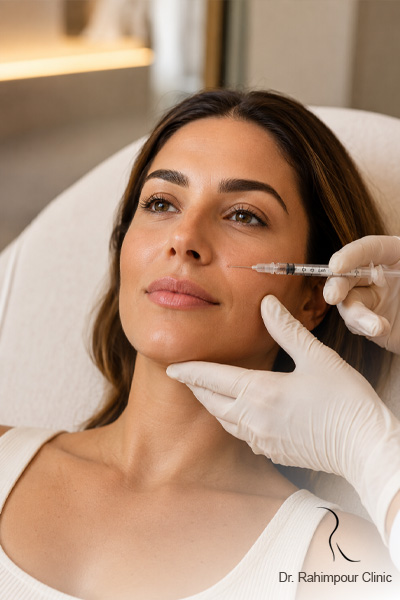
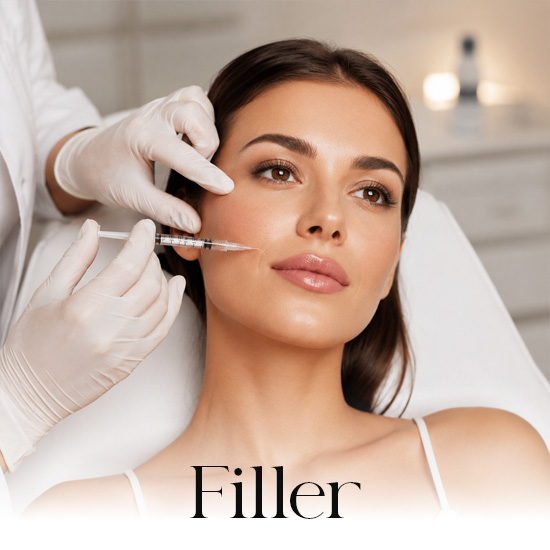
Dermal fillers are among the most widely used treatments for non-surgical facial rejuvenation and contouring. They can restore age-related volume loss, soften selected lines and depressions, enhance facial contours, and improve balance between facial features. Unlike Botox, which primarily reduces muscular activity, fillers work by providing volume and structural support or, in the case of biostimulatory products, promoting collagen production.
Depending on individual anatomy and aesthetic goals, fillers may be used to enhance the lips, restore cheek and midface volume, define the chin and jawline, improve selected under-eye hollows, soften nasolabial and marionette lines, and address other areas affected by volume loss. Modern filler treatment is not simply about adding volume. The objective is to identify where structural support or volume has been lost and restore it selectively while preserving natural facial proportions.

Filler

Type of Fillers

Hyaluronic Acid (HA): The most commonly used category of injectable fillers. Hyaluronic acid occurs naturally within the body, and HA fillers with different physical characteristics are designed for different facial areas and treatment goals. Depending on the product, they can be used for the lips, cheeks, chin, jawline, facial lines, and other areas. An important advantage of HA fillers is that many can be dissolved with Hyaluronidase when clinically necessary.

Calcium Hydroxylapatite (CaHA): A filler with both structural and collagen-stimulating properties. It can be used for selected areas requiring contour enhancement, support, or tissue rejuvenation. Appropriate patient selection, injection depth, and anatomical placement are particularly important.

Poly-L-Lactic Acid (PLLA): Primarily acts as a collagen biostimulator. Rather than simply providing immediate volume, it stimulates gradual collagen production, with results developing over several weeks to months. Multiple treatment sessions may be required to achieve the desired correction.

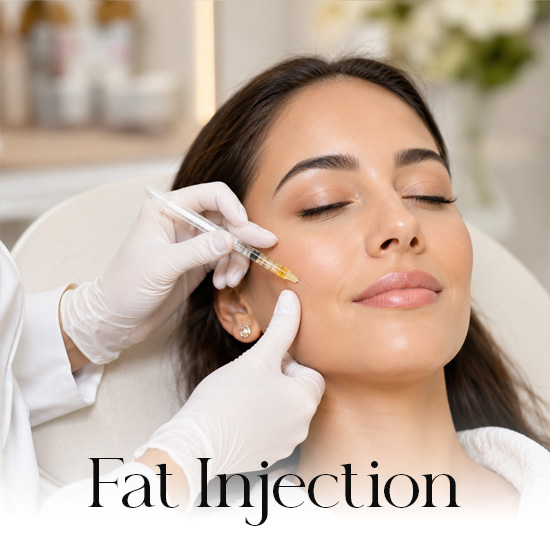
Autologous Fat Grafting: Fat is harvested from the patient’s own body—commonly from the abdomen, flanks, or thighs—processed, and transferred to areas requiring volume restoration. A proportion of the transferred fat may survive long term, although retention varies between patients. Unlike office-based dermal filler injections, fat grafting is a more invasive procedure and is generally planned separately as a surgical or minimally invasive treatment.

The optimal filler is selected according to facial anatomy, skin and tissue quality, degree of volume loss, treatment area, and desired outcome. A single product or volume is not appropriate for every patient. Detailed anatomical assessment and careful selection of the product, injection plane, technique, and volume are essential for achieving a safe, balanced, and natural-looking result.

Procedure Essentials

Session Duration

Approximately 30–60 minutes

Anesthesia

Topical/local anesthesia; many HA fillers contain Lidocaine

Recovery Timeline

Minimal downtime; mild swelling or bruising may persist for several days

Aesthetic Results

HA: largely immediate, refining as swelling subsides; biostimulators: gradual

Longevity

Varies considerably by product, treatment area, and individual factors; commonly several months to over a year

Repeat Interval

Individualized according to filler type, treatment area, and residual correction

Clinical Considerations

Vascular anatomy, injection plane, product selection, technique, and preservation of natural facial proportions

Number of Sessions

HA often requires one initial session; biostimulatory treatments may require a series

Filler Aftercare

• Touching and Massage: Avoid unnecessary rubbing, massage, or pressure over treated areas unless your physician specifically recommends massage for the product used.
• Daily Activities: Most normal daily activities can generally be resumed following treatment.
• Exercise: Strenuous exercise is best limited on the day of treatment and resumed according to your physician’s recommendations.
• Excessive Heat: Avoid saunas, hot tubs, and prolonged exposure to excessive heat during the early post-treatment period.
• Swelling: Mild to moderate swelling is expected and may be more noticeable following lip treatment. Most swelling improves over the following several days.
• Bruising: Small areas of bruising may occur and typically resolve spontaneously.
• Cold Compresses: When recommended, a gentle cold compress may be used without applying significant pressure to the treated area.
• Makeup: Apply makeup gently and hygienically, avoiding vigorous rubbing or pressure over injection sites.
• Facial Treatments: Facial massage, facials, laser treatments, RF, ultrasound-based procedures, and other treatments applying pressure or energy to the treated area should be postponed according to medical advice.
• Dental Procedures: Inform your physician about planned dental procedures or invasive oral treatments. Appropriate timing between elective dental treatment and filler injections should be discussed in advance.
• Early Asymmetry: Swelling may temporarily create apparent asymmetry; the final result should not be judged immediately after treatment.
• Final Results: HA filler results are best evaluated once swelling has settled and the tissues have stabilized. Biostimulatory products require longer for their effects to develop.
• Medications: Do not discontinue aspirin, NSAIDs, anticoagulants, antiplatelet medications, or other prescribed medications without consulting the prescribing physician.
• Follow-up: A follow-up visit may be arranged to assess symmetry, volume, tissue response, and overall aesthetic outcome.

Important Warning Signs

Severe or increasing pain, blanching or unusual paleness of the skin, mottled or reticular discoloration, cool skin, blistering, ulceration, or any sudden visual disturbance following filler injection is not considered normal and requires immediate medical assessment.
Sudden loss or alteration of vision, double vision, acute eyelid drooping, an unusual severe headache, or neurological symptoms following injection should be treated as a medical emergency.

Contraindications & Precautions Principal Contraindications

• Known hypersensitivity to the filler material or any component of the specific product
• Known hypersensitivity to Lidocaine when a Lidocaine-containing product is used
• Active infection at the proposed injection site
• Significant active inflammation or skin disease in the treatment area
• Any product-specific contraindication stated by the manufacturer

Conditions Requiring Additional Caution or Medical Assessment

• Pregnancy: Cosmetic filler treatment is generally avoided because safety data are limited.
• Breastfeeding: Available safety information is limited and treatment should be considered individually.
• Active autoimmune or inflammatory disease
• History of severe allergic reactions or anaphylaxis
• Previous significant inflammatory reaction, granuloma, or complication related to dermal fillers
• Bleeding disorders or treatment with anticoagulant/antiplatelet medications
• Active systemic infection or acute illness
• Active Herpes simplex infection in the treatment area; prophylaxis may be considered for selected patients with recurrent herpes.
• Previous permanent fillers, implants, or injectable materials in the treatment area, particularly when the material or exact location is unknown
• Previous surgery or significant anatomical alteration in the intended treatment area
• Recent or planned dental procedures, laser treatments, chemical peels, or other invasive procedures that may increase inflammation or infection risk
• Unrealistic expectations or requests for treatment volumes or changes that are inconsistent with anatomical safety and natural facial proportions

Important: Filler safety depends on more than the product itself. Detailed knowledge of facial vascular anatomy, appropriate product and injection-plane selection, meticulous technique, and the ability to recognize and promptly manage complications—particularly vascular occlusion—are fundamental to safe treatment.

Explore Our Non-Surgical Treatments

Advanced minimally inasive solutions to refresh, restore and refine your natural beauty.

Patient Testimonials

Refined Results. Confident Experiences.

“From consultation to treatment, the experience was handled with professionalism and care. The final result felt elegant and beautifully balanced.

Patient 1
“I valued the clarity, precision, and thoughtful approach throughout the process. The outcome was subtle yet noticeable in the best possible way.”

Patient 2
“The treatment was efficient, comfortable, and tailored to my concerns. I especially appreciated the natural-looking result and the clinic’s refined attention to detail.”

Patient 3

Answers to Common Questions

The most suitable treatment depends on your facial anatomy, skin condition, aesthetic goals, and medical history. During consultation, the treatment plan is tailored to your needs to ensure natural-looking and medically appropriate results.

Most non-surgical treatments involve minimal discomfort. Depending on the procedure, topical numbing, local anesthesia, or comfort measures may be used to improve the treatment experience.

Downtime varies depending on the treatment. Some procedures allow an immediate return to daily activities, while others may involve temporary redness, swelling, bruising, or sensitivity for a short period.

Some treatments provide visible improvement shortly after the session, while others develop more gradually over several days or weeks. The timing depends on the treatment type and the body’s natural response.

The longevity of results varies based on the procedure, treatment area, skin quality, and individual metabolism. Some treatments may last several months, while others may require periodic maintenance for optimal results.

sample